


UAE traditional dress plays an important role in everyday life, religious celebrations, and national events.
Whether it’s a man wearing a white kandura or a woman in a flowing black abaya, traditional Emirati clothes carry meaning, style, and history.
During events like National Day, weddings, or Eid, you will see Emiratis dressed in their finest traditional outfits, often with beautiful details and accessories.
In this blog, you will learn all about the traditional dress worn by men and women in the UAE.
We will explore the history behind the clothing, how it is worn, and where to find it. You will also get tips on what to wear if you are visiting the UAE and want to respect the local culture.
What Are the Names of Emirati Traditional Clothes?
Below is a list of the most common items that make up traditional Emirati clothing for both men and women. These garments reflect the cultural values of modesty, identity, and heritage. Many are still worn daily or on special occasions across the UAE.
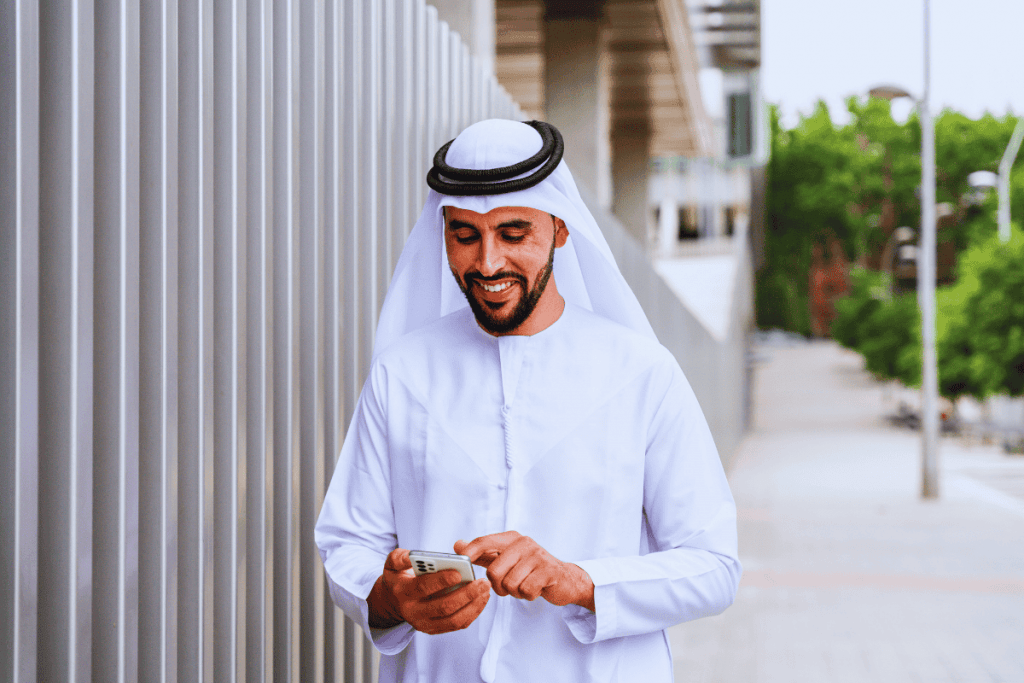
For Men
- Kandura – A long white robe, also called a dishdasha or thobe
- Ghutra – The headscarf, usually white or red-checkered
- Agal – A black cord used to secure the ghutra on the head
- Bisht – A formal cloak worn over the kandura on special occasions
- Ghafiyah – A white crocheted cap worn under the ghutra
For Women
- Abaya – A long black cloak worn over clothing
- Shayla – A scarf wrapped around the head and shoulders
- Jalabiya – A colorful, loose-fitting traditional dress often worn at home or during celebrations
- Burqa (Battoulah) – A metallic-looking face covering worn by older generations of Emirati women
- Niqab – A black face veil that covers the lower half of the face (optional and based on personal choice)

Traditional Emirati Dress for Men
The Kandura (Arabic Dress for Men)
The kandura is the traditional long robe worn by Emirati men. It is usually ankle-length and made from cotton or light fabric to suit the hot climate.
While white is the most common color, especially in summer, shades like beige, brown, and grey are also worn during cooler months. This Arabic dress kandura is designed for comfort, modesty, and elegance.
There are small variations in kandura styles across the Gulf region.
Emirati kanduras, for example, do not have collars and often feature a distinctive tassel at the neckline, which is lightly scented with perfume. In contrast, kanduras in Saudi Arabia and Oman may include buttons or embroidery.
The traditional Arabic traditional dress is completed with a ghutra, a square headscarf folded and worn on the head, usually in white or red-checkered patterns.
It’s held in place by a black cord called an agal. Simple leather sandals are often worn to complete the outfit.
Emirati men wear the kandura daily, as well as for formal occasions like Friday prayers, weddings, official meetings, and cultural celebrations.
Traditional Emirati Dress for Women
The Abaya and Sheyla
The abaya is the traditional long cloak worn by Emirati women. Usually black, it flows gracefully from the shoulders to the feet and is designed to be both modest and elegant.

Traditional abayas are plain, but modern styles often include embroidery, lace, or beadwork, giving women a way to express personal style while respecting cultural norms.
The sheyla is a long scarf worn over the head and often draped loosely around the shoulders.
Depending on the occasion, it may be styled simply or decorated with sequins or lace. Together, the abaya and sheyla form the core of Emirati traditional dress for women.
Traditional Undergarments and Accessories
Underneath the abaya, some women wear a dir’a, a lightweight, long-sleeved robe, or a kandora, which is different from the men’s version and made in more delicate fabrics and designs.
These layers help maintain modesty while allowing airflow in the desert heat.
Accessories like gold jewelry, intricate henna designs on the hands and feet, and traditional perfumes such as oud and rose are also important parts of UAE traditional dress.
These elements are especially prominent during special occasions like weddings and religious festivals.
Where to Buy UAE Traditional Clothes
If you want to experience Emirati culture up close, wearing traditional Emirati clothes is a great way to start.
Whether you’re shopping for a classic kandura or a stylish abaya, Dubai and other cities in the UAE offer plenty of options.
Local Markets and Souks
Places like Naif Souq and Al Fahidi Souk in Dubai are known for selling affordable and authentic UAE traditional clothes. You’ll find a variety of colors, fabrics, and designs.
These souks are ideal for budget-friendly shopping and some offer tailoring services on-site.
High-End Boutiques and Emirati Designers
For more premium options, head to shopping malls or visit local Emirati fashion designers.
Stores like Kandoora.com, Dar Al Kandora, or Al Motahajiba offer high-quality abayas and kanduras with modern touches and fine detailing.
Custom Tailoring vs Ready-Made
Many locals prefer custom-made outfits for a perfect fit. Tailors can create a kandura or abaya based on your measurements, fabric choice, and preferred style. Ready-made options are convenient and usually available in standard sizes.
Price Range
- Kandura: AED 150 to AED 700 depending on fabric and tailoring
- Abaya: AED 200 to AED 2,000 based on brand, embroidery, and fabric quality
FAQs
1. What is the traditional dress for men in the UAE called?
The traditional Emirati dress for men is called the Kandura (or Dishdasha), a long white robe typically worn with a Ghutra (headscarf) and Agal (black cord). It reflects modesty, comfort, and cultural identity.
2. What do Emirati women traditionally wear?
Emirati women traditionally wear an Abaya, a long black cloak, paired with a Sheyla (headscarf). Some also wear Jalabiya or Dir’a underneath, often with elegant embroidery and gold jewelry for special occasions.
3. What is the difference between a Kandura and a Thobe?
While both are traditional robes worn by men in the Gulf, the Kandura (UAE) is typically plain and collarless with no embroidery, whereas a Thobe (common in Saudi Arabia) may have more stitching details and a collar.
4. Why do Emiratis wear white Kanduras?
White Kanduras are popular due to their suitability for the hot climate, reflecting sunlight and keeping the wearer cool. In cooler months, darker shades like beige or grey are worn.
5. Can tourists wear traditional Emirati clothing?
Yes, tourists can wear traditional Emirati attire, especially during cultural events or visits to mosques. It’s recommended to wear it respectfully and modestly to honor local customs.
6. Is it mandatory for Emirati women to wear the Abaya?
While the Abaya is a cultural norm, it’s not legally mandatory. However, it is widely worn in public as a sign of modesty and tradition.
7. What fabrics are used in traditional UAE clothing?
Lightweight cotton, linen, and silk are commonly used for Kanduras and Abayas, especially during the summer. In cooler seasons, wool blends may also be used.
8. How much does a Kandura or Abaya cost in Dubai?
A ready-made Kandura starts from AED 150, while custom-tailored versions can go over AED 500. Abayas range from AED 200 to over AED 1,000 depending on design, fabric, and embroidery.
9. Where can I buy traditional Emirati clothes in Dubai?
You can find them at Naif Souq, Al Fahidi Souk, high-end malls, and Emirati designer boutiques. Many shops also offer tailoring for a perfect fit.
10. What accessories are worn with Emirati clothing?
Men often wear the Ghutra, Agal, and leather sandals. Women pair their attire with gold jewelry, perfume, henna, and sometimes the Burqa or Niqab for added modesty.
