
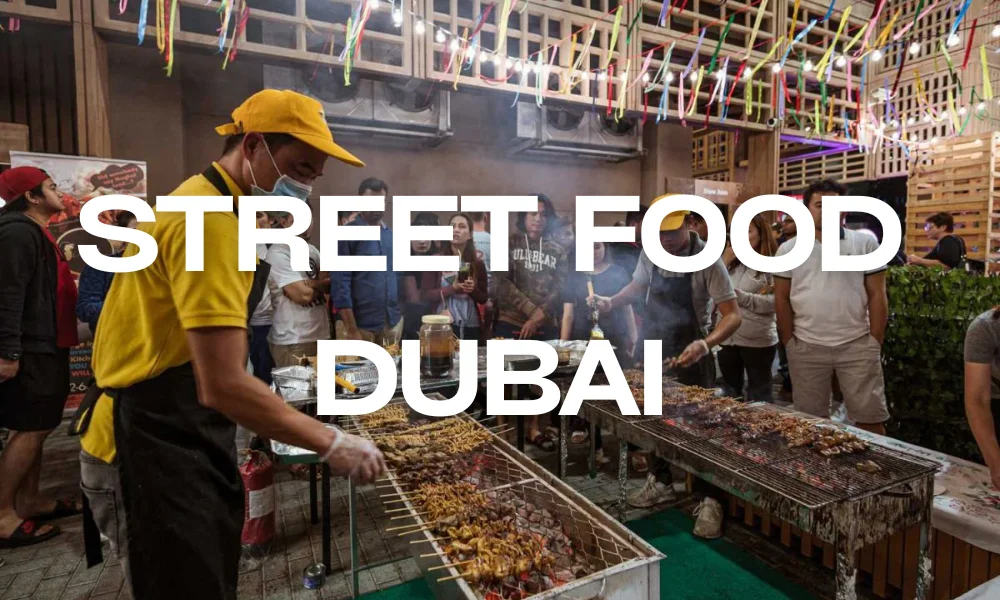

Dubai gets a lot of attention for its luxury hotels, skyscrapers, and designer malls. But ask any local or long-time expat where the real food is, and they’ll point you straight to the streets.
The street food scene in Dubai is unlike anywhere else. With over 200 nationalities living in one city, you can eat Pakistani biryani, Lebanese manakish, Filipino sisig, and Emirati luqaimat all within a few blocks of each other. Prices are low, quality is high, and the food runs 24 hours a day. This guide covers the best areas, the must-try dishes, and everything you need to know before you go.
Why Dubai Street Food Hits Different
Before we get into locations, here’s why Dubai’s street food scene stands out:
It’s genuinely diverse. Dubai’s street food reflects the multicultural nature of the city. You’re not getting a watered-down version of international food. You’re getting recipes brought directly by the communities who live here.
It’s affordable. Most top street foods cost between AED 2 and AED 15. A full satisfying meal under AED 30 is completely normal.
It’s clean. Dubai’s municipality enforces strict hygiene standards across all food vendors, including street stalls and carts. The AED 7 shawarma has to meet the same food safety rules as the restaurant down the road.
It never sleeps. Dubai comes alive after sunset. Late-night shawarma stands become social hubs, and you’ll find fresh tandoori chicken and hot parathas at 2 AM without any trouble.
Best Areas for Street Food in Dubai
1. Deira: Old Dubai’s Food Capital
If you only have time for one neighborhood, make it Deira. This is the oldest part of Dubai, the part that existed long before the Burj Khalifa and the Palm, and it remains the undisputed king of authentic street food.
The Al Rigga area is packed with Pakistani and Indian restaurants. Ravi Restaurant and Special Ostadi are two names that come up constantly among locals. Both serve generous portions at prices that haven’t changed much in years.
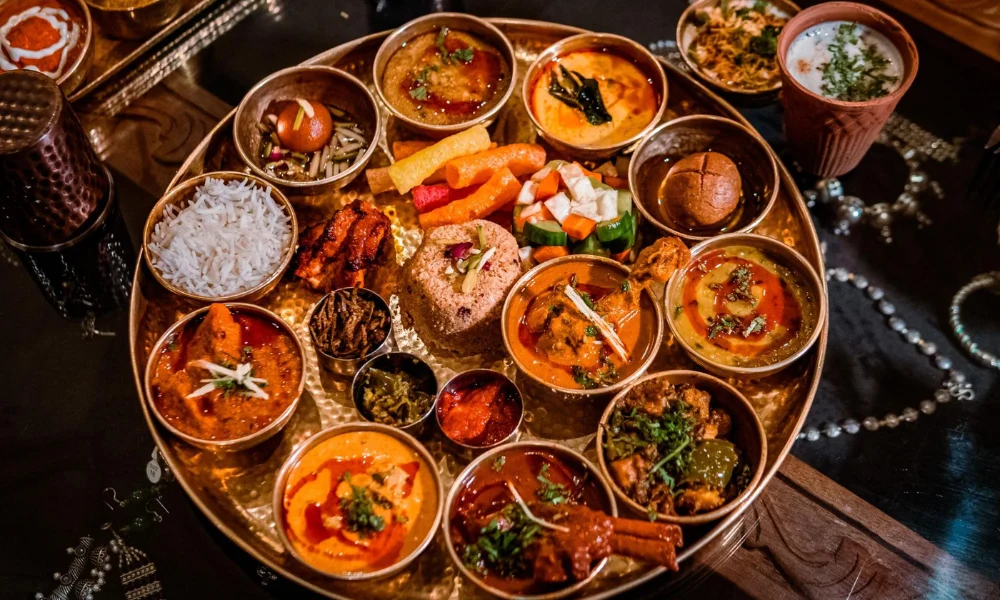
Muraqabbat Street is your spot for Yemeni mandi and salta, slow-cooked meat and rice dishes that are heavy, smoky, and deeply satisfying. The Al Ras area has small Iranian cafeterias serving kubideh kebabs and rice dishes you won’t easily find elsewhere in the city.
What to eat here: Biryani, mandi, Iranian kebabs, Pakistani karahi, chai
Price range: AED 10 to 25 per meal
2. Al Dhiyafa Street, Satwa
Locals call it “2nd December Street.” It’s a straight line of food options. Lebanese bakeries sit next to Filipino restaurants next to Pakistani kebab houses, all within walking distance of each other.
Ravi Restaurant’s Satwa branch is an institution. Smoky chicken tikka, garlic naan, and daal for under AED 30 per person. The small Iranian cafeterias scattered along the street serve some of the city’s best kubideh. And if you want fresh manakish straight from the oven, the Lebanese bakeries here do it right.
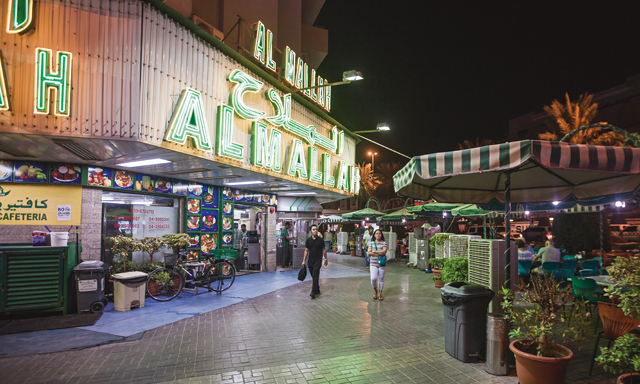
What to eat here: Shawarma, manakish, falafel, chicken tikka, kubideh
Price range: AED 5 to 20 per meal
3. Karama
Karama is a residential neighborhood that punches well above its weight when it comes to food. It’s where a huge part of Dubai’s South Asian and Southeast Asian community lives, and that shows in the restaurants and food stalls lining the streets.
You’ll find Filipino snack spots, Indian chaat counters, South Indian meals by the plate, and Chinese takeaways all packed into a small walkable area. It’s unpretentious, busy, and excellent value.
What to eat here: Indian chaat, Filipino snacks, South Indian meals, kebabs
Price range: AED 5 to 18 per meal
4. Kite Beach and Jumeirah
If Deira is for the serious food seekers, Kite Beach is for the casual visitor who wants great food with a view. The beachfront strip has a mix of food trucks, casual cafes, and quick-service spots. Salt Kite Beach is probably the most talked-about stop here, known for smash burgers and solid Indian-influenced bites.
Jumeirah in general is a good spot to explore if you want the trendy food truck side of Dubai’s street food culture rather than the old-school neighborhood spots.
What to eat here: Burgers, wraps, grilled corn, fresh juices
Price range: AED 15 to 40 per item
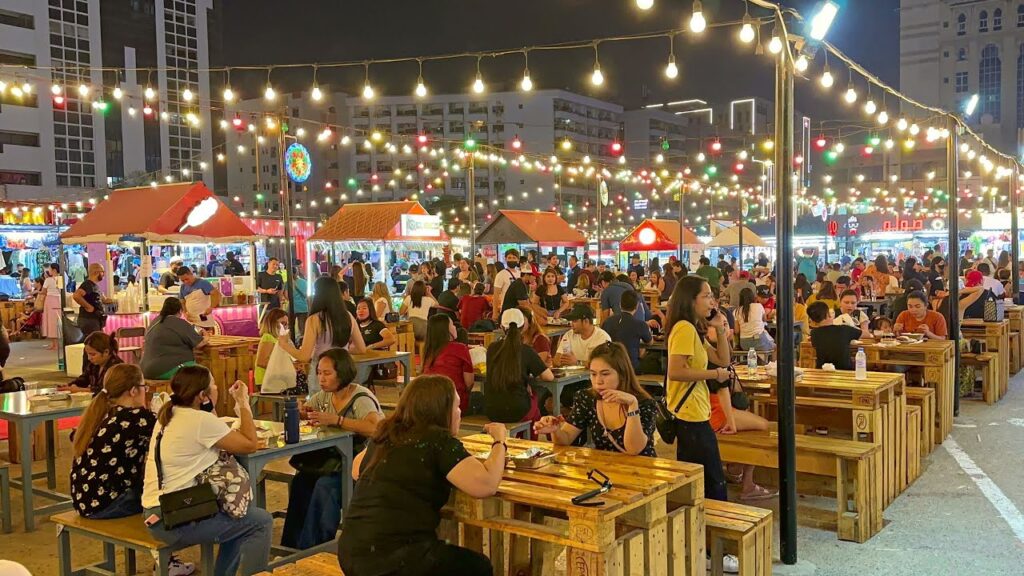
5. Global Village
Global Village is seasonal, typically open October to April, but when it’s running it’s one of the most unique food experiences in the city. The setup includes Asia Boulevard, Indian Chaat Bazaar, a Floating Market, Arabian Square, and a full Dessert District.
You can eat your way through a dozen countries in a single evening. Traditional Asian fare, spicy Indian snacks, Emirati sweets, and fresh fruit stalls all in one place. It’s tourist-friendly but the food quality is genuinely good, especially at the smaller country pavilions.
What to eat here: Indian chaat, knafeh, luqaimat, Asian street snacks, fresh-pressed juices
Price range: AED 5 to 25 per item
6. The Last Exit
The Last Exit is a food truck park concept with a few locations around Dubai, including Al Khawaneej and on the E311. It’s themed around road-trip and industrial aesthetics, and the food spans burgers, loaded fries, tacos, grilled meats, and more.
It’s a more curated, Instagram-ready version of street food compared to Deira or Satwa, but the quality is solid and it’s a fun evening out, especially with kids or groups.
What to eat here: Burgers, tacos, loaded fries, shakes
Price range: AED 20 to 50 per meal
Must-Try Street Foods in Dubai
No matter which area you visit, here are the dishes you should not leave Dubai without trying:
Shawarma is probably the most iconic street food in the city. Chicken or lamb cooked on a rotating spit, sliced thin, and wrapped in soft bread with garlic sauce, pickles, and vegetables. Every vendor has their own sauce recipe. Price: AED 5 to 12.
Falafel are deep-fried chickpea balls, crispy on the outside and soft inside, served in pita with tahini, fresh vegetables, and pickles. One of the best vegetarian options on the street. Price: AED 3 to 8.
Manakish is Lebanese flatbread topped with za’atar, cheese, or minced meat and baked fresh. Best eaten hot, straight from the oven. Price: AED 5 to 10.
Karak Chai is spiced milk tea with cardamom and sometimes saffron. It costs almost nothing (AED 1 to 3) and is everywhere. Non-negotiable.
Luqaimat are small Emirati sweet dumplings drizzled with date syrup and sesame seeds. Light, warm, and addictive. Price: AED 5 to 15.
Biryani and Mandi are rich layered rice dishes from South Asian and Yemeni kitchens. Mandi is slow-cooked in a tandoor pit; biryani is spiced and aromatic. Both are heavy and satisfying. Price: AED 10 to 25.
Samboosa are small fried pastries stuffed with spiced vegetables or meat. A great grab-and-go snack. Price: AED 2 to 5.
Hummus and Bread are fresh and creamy, made daily at most Lebanese and Arabic spots. Often comes as a starter but worth ordering on its own. Price: AED 5 to 10.
Practical Tips Before You Go
Go in the evening. Dubai’s street food culture is strongest after sunset. Crowds pick up around 8 to 9 PM and food stalls run well past midnight.
Carry cash. Most small stalls and street vendors are cash-only. Small denominations in AED are useful.
Don’t judge by looks. The most unassuming spots, plastic chairs, handwritten menus, no English signage, often serve the best food. If there’s a queue of locals, join it.
Stick to high-footfall spots. Busy stalls turn over food quickly, which means fresher ingredients. A crowded shawarma counter at 10 PM is a better sign than an empty one at 6 PM.
All food in Dubai is halal. There’s no need to check. Every food vendor and restaurant in Dubai serves halal food only. Alcohol is not part of the street food scene.
Budget guide:
- Snack or chai: AED 1 to 10
- Single dish (shawarma, falafel, manakish): AED 5 to 15
- Full meal (biryani, mandi, kebab plate): AED 15 to 30
Final Thoughts
Dubai’s street food is one of the most underrated things about the city. Most visitors spend their time in malls and fine dining restaurants and miss the real culinary experience entirely. The streets of Deira at midnight, a fresh shawarma wrapped in front of you, chai from a tiny stall on Al Dhiyafa Road. That’s the Dubai that locals know.
Start in Deira if you want authentic and affordable. Head to Satwa for variety. Hit Kite Beach if you want food with a view. And if Global Village is in season, block out a full evening for it.
Save this guide, share it with someone planning a Dubai trip, and go hungry.
Frequently Asked Questions
Is street food in Dubai safe to eat?
Yes. Dubai’s municipality enforces hygiene standards across all food vendors, including street-level stalls and carts. You can eat without the concern you might have in other cities.
What is the most famous street food in Dubai?
Shawarma. You’ll find it on almost every street corner, and locals take strong opinions on whose version is best. Iranian kubideh and Indian biryani are also extremely popular.
Where do locals actually eat?
Deira and Satwa. These are the neighborhoods where long-time residents and workers eat daily. Prices are low, portions are generous, and the food is the real thing.
Is street food cheap in Dubai?
Very. You can eat a satisfying meal for AED 15 to 25. Even at the beachfront spots where prices are slightly higher, Dubai street food is affordable compared to restaurant dining.
When is the best time to visit Global Village for food?
On weekday evenings to avoid the weekend crowds. It typically runs October through April each year.

Leave a Reply