

Understanding and trying to choose health cover in Dubai can be a bit of a minefield, with laws changing all the time and those dreaded rising healthcare costs! Whether you are an expat in the UAE, are moving to the UAE in the near future, or have been living in the UAE for some time, knowing about the health insurance sector is vital for your health and financial interests.
In this ultimate guide, we’ll dive into everything you need to know about health insurance in Dubai—from covering the pads and pens to the compulsory rules and picking the best plan for your family or job.
This complete checklist will make health insurance in Dubai much less mysterious, taking you from the necessity of buying something to how to have peace of mind about the plan you actually get for both you and your family.
Why Health Insurance Is Mandatory in the UAE

Hence, the government of the UAE, under the motto of healthcare for all, has mandated health insurance in the UAE. For example, in Dubai, all residents (including expats and their dependents) are required to have valid health insurance under the Dubai Health Authority (DHA). That safeguard guarantees Americans can get the medical treatment they need without fear of being buried by big upfront costs.
As of January 1, 2025, the rule extends to include all types of private sector workers and domestic help in all seven emirates. It is a requirement for employers to ensure that their employees have health insurance, and sponsors need it for domestic staff. Breaking it would invite heavy penalties and may also delay your visa process.
So, how do you get it? If you work, that means that your company is required to give you insurance for your job in Dubai or arrange your employer’s health insurance in Dubai. Domestic worker, self-employed. If you are a dependent, a domestic worker, or self-employed, you will have to purchase your own policy. You can do this either directly from the insurance companies or through reliable insurance brokers in Dubai.
Dubai health insurance is governed by the Dubai Health Authority (DHA). Every citizen is required to have health insurance, which can be purchased privately or provided by an employer.
What Does It Cover?
- General physician consultations
- Emergency services
- Hospitalization
- Prescription medicines
- Maternity care (for eligible plans)
Important Fact:
The minimum health insurance was determined to be the Essential Benefits Plan (EBP), basic services at an affordable premium for low-income workers.
Compulsory health insurance laws have been adopted in the UAE to alleviate the burden on public health and to ensure universal access to care.
Penalties for Non-Compliance
- AED 500/month fine for uninsured residents
- Visa renewal delays or rejections
- Penalties for employers who fail to insure their employees
How to Get Insured in Dubai
- Through employer (if you are working)
- Through individual plans offered by licensed companies, such as Daman, AXA or Orient.
- Via family plans for children and spouses
Note: Check the insurer’s DHA license status before you purchase.
Health Insurance Plans in Dubai

In Dubai, UAE, there is no set number of health insurance plans, as several companies with valid licenses provide several health insurance plans to cater to your (different) needs. But they are generally broken down into the following main categories of plans:
1. Essential Benefits Plan (EBP)
- Minimum family coverage for low-wage workers and dependents.
- Cost: ~AED 600–800/year.
- Licensed by the Department of Health in Dubai (DOH) and the Dubai Health Authority (DHA).
Offered only by DHA-approved insurers.
2. Individual Health Insurance Plans
- For the self-employed, those laid off, or those not covered by an employer.
- May be primitive or deluxe.
Other add-ons (for an additional charge): maternity, dental, optical, worldwide cover.
3. Family Health Insurance Plans
- Includes spouses, children, and, in some cases, parents.
- Allows to add coverage such as maternity, dental, optical etc.
The premiums are based on the age and health status of the family members.
4. Group/Employer-Sponsored Health Insurance Plans
- Provided by companies to their employees (compulsory by legislation).
- May cover or may not cover dependents (depends on employer policy).
Typically comes with more extensive network access and faster claims processing.
5. Corporate/SME Health Insurance Plans
- For businesses covering 5+ employees.
- Customizable packages with specific terms (annual limits, co-pays, worldwide coverage).
6. International/Global Health Insurance
- For frequent travelers or expats in need of worldwide coverage.
- Includes treatment in (and some may exclude U.S./Canada).
7. Specialized Plans
- Maternity-only plans
- Senior citizen health insurance
- Golden Visa holder plans
- Nanny (domestic worker, e.g., nanny, maid, etc.) proposals
How many issuers offer the plans ?
As of 2025, there are over 40 DHA-licensed health insurance companies in Dubai, which include:
- Daman
- AXA Gulf
- Orient Insurance
- Bupa
- MetLife
- Takaful Emarat
- Noor Takaful
- Salama
- NextCare (TPA-based)
Which Things you can consider when choose any Health Insurance Plan in Dubai
When you choosing health insurance Plan in Dubai , You will consider some things. With so many different options, both basic and comprehensive, there are a few things to take into consideration so you end up with coverage that fits your lifestyle and budget.
Understanding Your Needs
Health and Well-being: Consider your general health, any conditions and any medical requirements.
You and Your Family: Do you require coverage just for yourself or a family health insurance UAE? Family plans can also provide financial savings.
Budget: Decide on how much you can afford to spend for health insurance premiums in Dubai. Don’t forget to take deductibles, co-payments and out-of-pocket maximums into account.
Preferred Healthcare Providers: Are there doctors, hospitals, and other providers you want included in the plan? See if they are in the insurer’s network.
How to Select the Right Health Insurance in Dubai 2025
Choosing the best health insurance in Dubai can be challenging; understanding what you need and the choices may help you decide. With so many different types of plans available—from the most simplistic to those with all the bells and whistles—it’s important to consider a few critical factors so that you select coverage that works for the way you live your life, as well as the money you bring home.
It’s not just about meeting the compulsory health insurance Dubai requirements; it’s about protecting your peace of mind and your opportunity to receive good health care.
Here’s a comprehensive checklist to help you make decisions for 2025:
Evaluate Your Health and Lifestyle Reasons for Smoking
And before you even find a packet with one policy in it, do an honest assessment of your and your family’s health situation and lifestyle. This is a core step while looking for proper health insurance in Dubai.
Current and Past Medical History
Are you healthy, or do you have any pre-existing illnesses (e.g., diabetes, high blood pressure) or long-term conditions requiring medical treatment or medication? The Essential Benefits Plan (EBP) typically covers these with a waiting period, while enhanced health insurance in Dubai may cover them with or without a waiting period or give better coverage to these conditions.
Do you expect to have any specific health need during the year, such as interesting surgeries or therapy?
Family Planning & Maternity Coverage
If the idea of starting a family or having more children is a possibility, comprehensive maternity coverage Dubai provides is a definite must. Look at what it covers for prenatal care, delivery (normal vs. C-section), and postnatal care. And make sure there’s coverage for the newborn for at least some period after birth.
Dental and Optical Needs
Do you, or anyone in your family, need preventative dental treatments or orthodontic work in the near future? Are glasses an ongoing expense? Many of the most basic plans exempt these, so consider enhanced or comprehensive coverage types if these concerns are “must-haves” for you, like the protective plans we’ve reviewed above.
Per trip (international health insurance)
If you travel regularly outside the UAE, find out if your plan includes regional or worldwide coverage for medical claims. Some of the plans on offer cover the entire world (with or without the USA and Canada), clearly important for anyone about to embark on a round-the-world trip.
Age and Dependents
Because, in particular, age factors heavily into premiums while you’re over 60. Keep in mind the ages of all dependents when comparing the family health insurance in the UAE, as premiums for kids and parents, who are old, can differ. By law (DHA), employers must cover employees, but dependents generally need separate policies.
Know Your Provider Network
Your plan’s network of hospitals, clinics, and specialists is key. It dictates where you can receive treatment and whether direct billing (meaning that the provider gets paid directly by the insurer) is available.
Preferred Healthcare Facilities: Have you used certain hospitals, clinics, or doctors that you trust or prefer to go to? Check if they are in-network for the insurance company. A reduced network could translate into fewer options or greater out-of-pocket costs if you decide to see a provider who isn’t in the provider network.
DHA-Compliant Plan Audio Conferences
Plan Coverage Maps: Access Detailed Network Lists The Health Insurance Various Insurers Producing DHA-compliant Plans Refer to our detailed network lists to find the one you want Questions? Make sure the DHA-approved providers you require are within easy reach of your home or place of work.
Territorial Limits: Check whether the scope is limited to Dubai, the United Arab Emirates (UAE), the Gulf Co-operation Council (GCC) countries or if it is a worldwide protection. This is particularly important if you live in one emirate and work in, or regularly visit, another.
Compare Other Expenses
And while the annual premium is the most visible cost, it’s only one component of the puzzle. You have to be in a position to understand the genuine health insurance cost Dubai.
Annual premiums: The fixed sum you pay each year (or on some other schedule) for your policy. For an EBP, premiums could begin from AED 650-725 per employee and dependents per annum, but there are comprehensive offerings running into the tens of thousands.
Co-payments \(Co-pays\): A set fee for a particular service \(eg AED 50 for a GP visit, AED 100 for a specialist\). And higher co-pays typically translate into lower monthly premiums.
Deductibles: The sum you pay out of pocket before insurance kicks in. A high deductible is typically paired with a low premium. If you’re relatively healthy and don’t expect to have many claims, a higher deductible could be a way to save on costs.
Co-insurance: This is a percentage of the cost of a covered service that you must pay once you’ve met your deductible. For instance, 80/20 co-insurance means the insurer pays 80 percent and you pay 20 percent.
Out-of-Pocket Maximum: This isthe maximum you pay for covered medical expenses in a policy year. After you reach this maximum, your insurance covers 100% of covered expenses for the rest of the policy year. That’s an important defense mechanism.
Sub-limits: Pay attention to the sub-limits on individual benefits (such as a capping on the maximum payable for a treatment, room rent per day, medication costs per annum): Those can have big effects on your real out-of-pocket costs.
Know What the Policy Terms
The fine print matters. And whatever you do, don’t skip reading the policy document from the fine print to the gory details.
Exclusions: Understand what the policy doesn’t cover. Typical exclusions could be cosmetic surgery, certain complementary treatments (unless specified), or treatment which is not considered medically necessary.
Waiting Periods: For some cases like pre-existing conditions or maternity benefits, you might have a waiting period (say, 6 months to one year) before coverage is effective. This is an important consideration if you need help right away.Request of ProposalThis is the part of the process in which the loan company will request all the information they need to decide what kind of loan you should have.
Claim Settlement Ratio (‘CSR’): Check the insurer’s claim settlement ratio. The higher the CSR, the larger proportion of claims the insurer clears, implying trust and agility. Look for ratios above 80%.
Look at How Reputable the Insurer and Customer Service Are
You are only as good as the company that backs the policy.
Reviews and Reputation: Check the comments online and look for reviews; recommendations also help so make sure to ask other Dubai-based people if they know your mover. Look for feedback about customer service, the ease of claims processing, and how responsive the company is.
Digital Services: A good number of insurance companies today provide modern mobile apps for policy management, provider search, and claims submission. This is like having a normal Dolby Digital surround setupin your ears.
24/7 Support: 24/7 customer support in your native language can be a lifesaver, especially in the event of an emergency or while traveling.
Consult Experts and Get Quotes
Don’t go it alone. The Dubai health insurance market is large and complex to negotiate.
Insurance Brokers: Good insurance brokers in Dubai can be a great help. They are in contact with several competing insurance companies; they know the details of the varying insurance plans and can assist you to compare options based on your individual needs and budget, and it can cost you nothing directly. They can also help you navigate the application and claims process.
Online Comparison Options: Many insurance websites let you compare quotes or features between several providers at once.
Family vs. Group Health Insurance in the UAE: Which One’s Right for You?
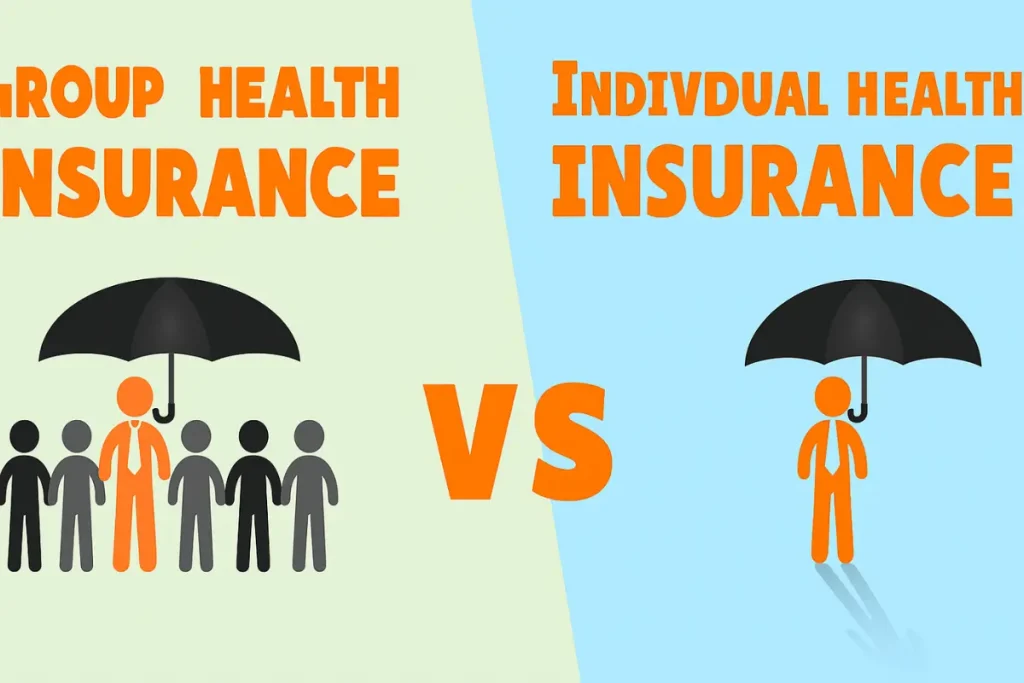
What to consider with family vs group health insurance Deciding which is best for you: family vs group health insurance Weighing up the pros and cons The post Family vs group health insurance appeared first on AXA. Both organizations have their place and both have their pros and cons.
It is important to understand the cost of living Dubai is high of these plans in order to make an informed decision, especially now that the Dubai health insurance laws have become more uniform for all emirates. You can choose the individual medical plan by Metlife UAE.
So let’s go through both and provide enough information to allow you to decide which is best for you.
Family Plan/Health Insurance
Family health insurance is a single policy that provides medical cover to the entire family. This usually means the policyholder, their spouse, and their children who are dependents. In certain instances (and depending on the insurer and the plan), it can also apply to cover parents or other dependents in your care.
Coverage Extent: A family health insurance plan includes coverage for your spouse, dependent children, and sometimes parents under one plan. This provides one branch-off point of service for your family’s health care.
More Bang for Buck Families: Although a solo family policy may appear to be more expensive than a solo individual plan, in many cases it winds up cheaper than getting numerous individual plans for each family member. The premium is generally in line with the age of the oldest member and the family’s overall risk factors.
Customization and flexibility: This is where family plans stand out. You also have a lot of say over the specifics of your coverage. You are usually able to customize your plan with a number of add-ons:
- Enhanced maternity benefits.
- Dental and optical coverage.
- Global coverage (with or without USA/Canada).
- Higher annual limits.
Choice of larger hospital networks. This amount of customization will make your plan a perfect fit for your unique family healthcare needs and preferences.
Portability: The main benefit of personal and family policies is their portability. The policy is yours, not your employer’s. That means your insurance is portable, or doesn’t expire if you change jobs or become unemployed.
Direct Control: You are directly in control of the policy, renewals, claims and/or coverage adjustments. You also need to top 10 budgeting apps for save your money to invest on health by personal finance.
Group Health Insurance
Group health insurance is offered by employers to their employees as an employment benefit. Under the law in the UAE, employers are required to offer health insurance to their employees. “Group health plans made up more than 70 percent of the UAE health and medical insurance market in 2024, demonstrating their dominance and importance.”
Mandatory & Employer-Provided: Your company must provide you with a health insurance coverage and pay for all of it. Which means you typically pay no direct premium costs for your own coverage.
Potential Dependent Coverage: In Dubai, employers are only mandated by law to cover their employees, not their dependents (spouse and children). But – many kind employers add dependents (spouse & often up to 3 kids under 18/25 in F/T education) as an extra benefit. In Abu Dhabi, the mandate is broader, sometimes covering dependents too. You should check your employment contract and talk to your HR department to find out your company’s specific policy.
Uniform Coverage: Group policies are a collective coverage. That is, individual staffers would have less control over the details of their coverage. The level of benefits, network, and restrictions are often predetermined by the employer. This makes everything so much easier, but may not match exactly to what an individual family may want.
Affordability: Group health insurance is very affordable to your employees, some employees can even get it for free since employers cover the cost. It’s often cheaper for employers, too, with lower group rates per person than the individualized plans because the risk is spread among a wider pool.
Ease of Enrollment & Claims: Typically enrollment in is automatic when you join the organization and claims submission can be through your employer’s HR or their insurance contact.
Pre-existing Condition Coverage: Most group health insurance plans generally cover pre-existing conditions from the first day or within a short period as well.
Which One’s Right for You? A Practical Approach
As is often the case, the best option for you will depend very much on your situation:
If you are an employee, your first line of coverage will most probably be the employer-based health insurance in Dubai. For your spouse or children, and parents
Pro Tip: If your employer coverage wouldn’t cover all of your dependents or it doesn’t cover them enough to meet your family’s needs (such as insufficient maternity benefits or a smaller network), then it can make good sense to purchase separate family health insurance or individual add-on plans for your family members.
Even if your employer provides coverage for dependents, you may wish to obtain an additional family plan to have higher limits, a broader network, or certain benefits (such as comprehensive dental or optical coverage) not included in the group policy.
Please note that, as your sponsor, it is your legal obligation to ensure that your dependents in Dubai have adequate health coverage.
By taking a careful look at the pros and cons of both family and group health insurance plans, you will be able to guarantee that you and those you care about have the best health insurance in Dubai for 2025.
Daman Health Insurance in Dubai: Is It Worth the Cost
Daman—The National Health Insurance Company (Daman) Daman, or the National Health Insurance Company—Daman, is perhaps one of the biggest and most well-known health insurers in the country, especially in the emirate of Abu Dhabi, where it has its roots, as well as a considerable market share of the health insurance industry in Dubai.
As a member of the PureHealth family, Daman is a popular choice for Dubai residents searching for health insurance plans. But as we enter 2025, the question for many is, is the cost worth it?
To do this, we need to look beyond the price tag and weigh up what Daman offers with the value we believe it provides, taking into account range, benefits, and customer services, whilst putting it head-to-head with the latest health insurance regulations in the UAE.
What Is Daman Health Insurance?
Based in the U.A.E., Daman is the official operator of the National Health Insurance Company since 2006. It was created by law in 1998, and has since grown to have more than 3 million members and a network of 3,000+ medical providers, making it the go-to option for many UAE residents especially in Abu Dhabi and Dubai.
Best Features of Daman Plans
- DHA-approved coverage for Dubai residents
- Summary Benefits Plan (SBP) for low-income wage earners (EBP) for workers with low income
- Family and Executive media, advanced, premier tiers
- Claims app, e-cards, and provider search via our mobile app
- Adherence to UAE employment and visa laws
Pros of Choosing Daman
Robust hospital network: Enjoy the benefits of a network of leading hospitals and clinics throughout the UAE.
Economic EBP: Compliance without going bankrupt
Employers: Most commonly used for corporate group plans and government-sponsored plans
Quick processing: Claims and reimbursements are filed and generally approved swiftly.
Cons to Consider
Limited flexibility: Basic-tier plans might not be customizable for varying coverage needs.
Limited specialist access: Some regular plans restrict access to the best providers, while others require a recommendation.
Focus on region: Some plans are focused on Abu Dhabi, with fewer benefits in Dubai unless you upgrade.
Who Should Consider Daman?
Employed: Particularly individuals employed by companies where Daman is provided as part of their employment benefits.
Families: Supplementary plans include maternity, dental, and optical cover
Persons: Freelancers and local residents looking for DHA-compliant, yet affordable cover
Golden Visa holders: Daman has customized solutions for those who already call the emirate home.
Cost vs. Value: Is It Worth It?
Yes—if you value regulated, reliable, and affordable insurance coverage. Daman’s Basic Benefits Plan costs could be as low as AED 675/year, which is one of the cheapest ways to meet the expensive Dubai mandatory health insurance requirement. Enhanced and Premier plans will also offer more extensive coverage, but at higher premiums.
More company like AXA, Bupa and MetLife may provide more bespoke solutions for those who want worldwide coverage, flexibility, or premium add-ons. But for many residents, Daman offers a good compromise between cost and compliance.
Benefits of Health Insurance in Dubai
- Inpatient treatments in the UAE
- Emergency medical treatments or hospitalization
- Diagnostic tests
- Maternity services
- Prescription drugs
- Physiotherapy
- Preventative services (DHA mandatory vaccines and immunizations)
- Medical visits to a general doctor in the UAE
Compare the Best Health Insurance Plans in Dubai: Top Picks for 2025
Here are 3 highly-rated insurers in Dubai (based on customer feedback and network strength):
| Provider | Plan Type | Starting Price | Key Benefit |
| Daman | EBP + Premium Plans | AED 800/year | Strong public/private network |
| AXA Gulf | Individual & Family | AED 2,200/year | International coverage |
| Orient Insurance | Corporate & SME | AED 1,500/year | Employer-focused plans |
You can use a comparison portal like Bayzat or Policybazaar UAE to get the latest rates and coverage details.
Conclusion
In Dubai, health insurance isn’t just the law, it’s a practical investment in your health and future. No matter if you want to compare family plans, select an employer package or are trying to make sense of premiums, this guide helps make difficult decisions easier.
Review your choices each year and verify that the policy still works for your health and budget.
FAQ
Is health insurance compulsory in Dubai for expats?
Yes, all the residents in Dubai are required to have a legitimate health insurance policy to be able to live and work legally in Dubai.
Workers typically go through the employer’s insurer, though individuals and families can purchase private plans.
How much is health insurance in Dubai?
Basic plans are available from AED 600–800 per year, age and provider dependent.
Does Daman cover pre-existing conditions?
Yes, pre-existing are covered in DHA-compliant Daman plans after a waiting period (Normally 6 months).
What if I don’t have health insurance in Dubai?
You may be fined AED 500 per month and experience visa bans.
