
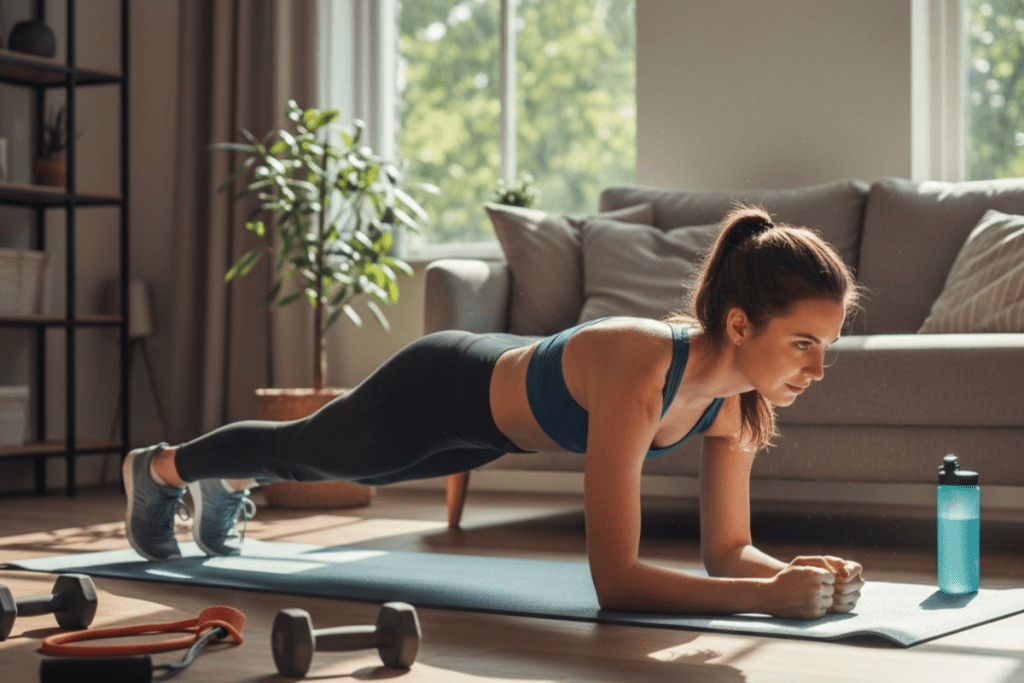

Home workouts are no longer just a backup plan; they are a practical way to stay fit without the gym. With a small space and basic equipment, anyone can build strength, improve flexibility, and be consistent. The real value is in the freedom to train on your own schedule, avoid crowded gyms, and focus on routines that fit your lifestyle. This home workout guide from chest and legs to back, glutes, and abs, exercising at home makes fitness simple, effective, and sustainable.
Benefits of At-Home Workouts
Why work out at home instead of heading to the gym? Here’s a clear comparison:
| Factor | Home Training | Gym Training |
|---|---|---|
| Cost | $0 – no equipment needed | $50+/month membership fees |
| Time | Exercise anytime with zero commute | Travel time required |
| Customization | Pause, modify, or progress at your own pace | Fixed schedules and crowded classes |
Bodyweight exercises like squats, planks, and lunges build strength effectively without any equipment. Looking for variety? Try yoga flows, push-ups with household items, or arm exercises using water bottles. You control the intensity, making progress both safe and sustainable.
Getting Started: Preparing for Home Workouts
Before you start the routines, set up your environment for safety and focus.
Setting up the Space
- Clean and clutter-free space with enough room to stretch out.
- Place a yoga mat on the floor to prevent slipping.
- Good ventilation is especially important in UAE apartments during summer.
Warm-Up and Cool-Down Essentials
A quick warm-up boosts blood flow and reduces injury risk. Spend at least 5 minutes on:
- Jumping jacks
- Arm circles
- Dynamic lunges
- Light jogging in place
Cooling down with stretches after workouts helps with muscle recovery.
Home Chest Building Exercises
Build a stronger chest at home with simple bodyweight exercises that deliver visible results without the gym.
Push-up Variations (Standard, Incline, Decline)
Push-ups are one of the most effective chest exercises you can do at home. The standard push-up targets your chest, shoulders, and triceps, making it a solid foundation move. Incline push-ups, where your hands rest on an elevated surface like a bench or chair, are easier for beginners and reduce pressure on the shoulders. Decline push-ups with your feet elevated increase resistance and activate the upper chest for added strength and definition.
Chest Dips and Resistance Band Workouts
Chest dips are great for building lower chest muscles. If you don’t have dip bars, you can use two sturdy chairs placed side by side. Resistance bands also offer a great variety. Band chest presses and flys mimic gym-style movements, giving your muscles consistent tension through the entire range of motion.
Equipment-Based Chest Routines
If you have basic home equipment like dumbbells or a bench, you can add more to your chest workout. Dumbbell presses and flys on the floor or bench target strength and muscle growth. Even with minimal gear, adding small weights makes a big impact.
Leg Exercises at Home Without Any Equipment
You don’t need heavy machines or a fancy setup to train your legs at home. With bodyweight exercises, you can build strength, balance, and endurance.
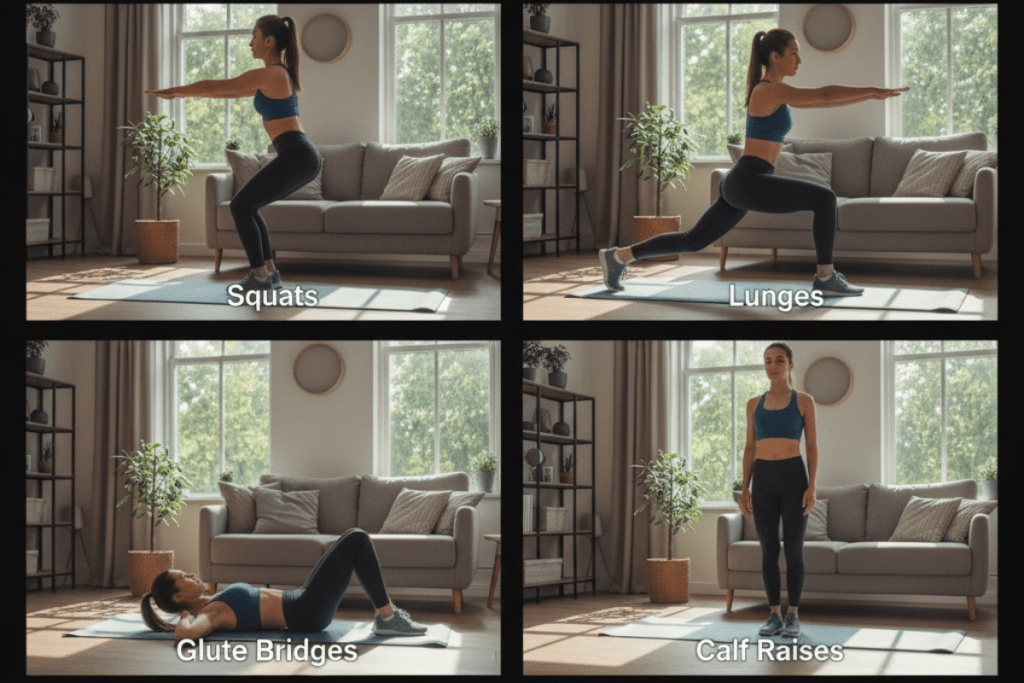
Squats
Squats are the foundation of any leg workout. It targets quads, hamstrings, and glutes and also engages your core. Keep your back straight, lower yourself slowly, and push through your heels as you get up.
Lunges
Lunges are great for developing stability and single-leg strength. Step forward with one leg, lower your body until both knees are bent at 90 degrees, then push back to the starting position. You can alternate legs or try walking lunges in a small space.
Glute Bridges
Glute bridges are perfect for activating the back of your legs and strengthening your glutes. Lie flat on your back, bend your knees, and lift your hips until your body forms a straight line from shoulders to knees. Squeeze your glutes at the top before lowering back down.
Calf Raises
This simple exercise tones and strengthens your calves. Stand with your feet hip-width apart and slowly lift your heels off the ground, balancing on your toes. Hold for a second before lowering back down.
Wall Sit
A wall sit builds endurance in your quads and challenges your mental toughness. Press your back against the wall, slide down until your thighs are parallel to the floor, and hold the position for as long as you can.
By combining these exercises, you can create a full lower body workout without spending a single dirham on equipment.
Back Exercises at Home
Get a toned and healthy back with bodyweight exercises that fit into your daily routine.
Best Bodyweight Back Workouts at Home
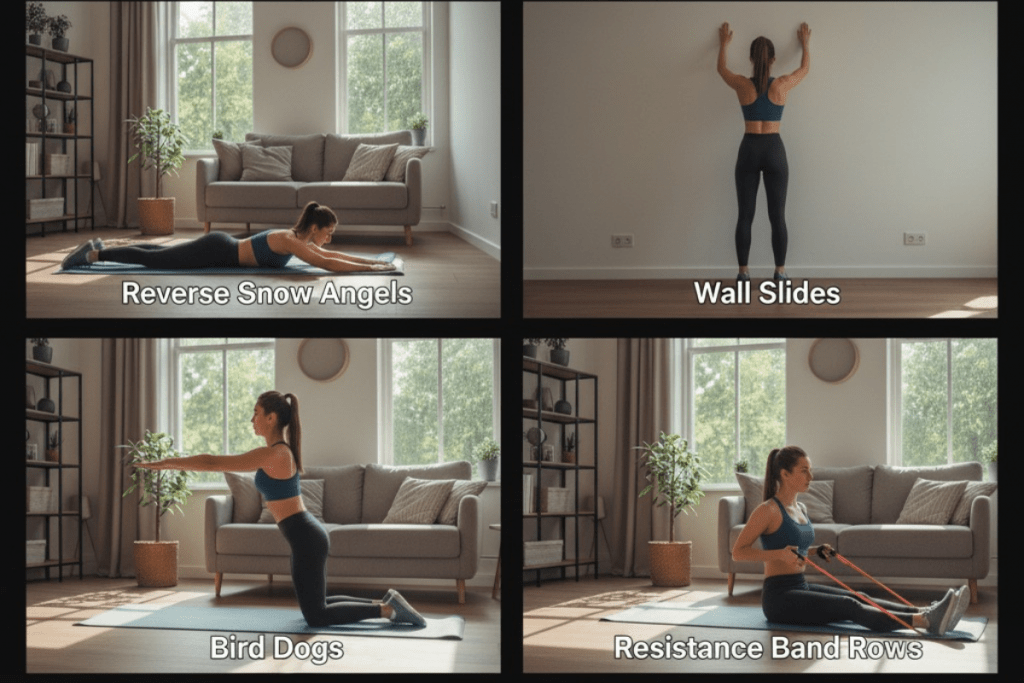
Your back muscles are key to strength and posture, and you can train them at home with bodyweight exercises. Classic moves like reverse snow angels, wall slides, and bird dogs work the upper and lower back and stability. If you have a pull-up bar installed, then pull-ups are another great option.
Resistance Band Rows and Superman Exercises
Resistance bands are a simple but powerful tool to build back strength. Seated or standing band rows mimic the motion of a rowing machine and target the lats and mid-back. For a bodyweight alternative, the superman exercise is a must. Lie flat on your stomach, lift your arms and legs off the floor, hold for a few seconds, and lower them back down. This works the lower back and helps balance out core training.
Back Strengthening Tips for Posture and Flexibility
Poor posture can lead to discomfort and stiffness, especially for those who sit for long hours. Adding simple stretches like cat-cow, child’s pose, and spinal twists keeps the back flexible. Focus on slow and controlled movements and breathing during each exercise. Having a routine that includes both strengthening and stretching will give you a healthier back and support long-term posture improvement.
Extra Tips
- Engage your core during every exercise to protect your spine.
- Move slowly and focus on form instead of rushing through reps.
- Balance pushing and pulling movements for an even upper body.
Sample Mini Back Workout (10 Minutes)
- Superman Hold – 3 sets of 20 seconds
- Resistance Band Rows – 3 sets of 12 reps
- Bird Dogs – 3 sets of 10 reps per side
- Wall Slides – 2 sets of 12 reps
- Child’s Pose Stretch – hold for 30 seconds to finish
This short workout will strengthen your back, improve your posture, and reduce stiffness, all from the comfort of your own home.
Glute Exercises at Home
Glute exercises at home are simple yet powerful for improving posture, preventing back pain, and shaping the lower body. Key moves like glute bridges, hip thrusts, donkey kicks, fire hydrants, and single-leg glute bridges activate different parts of the glutes without the need for equipment.
Glute Bridges and Hip Thrusts
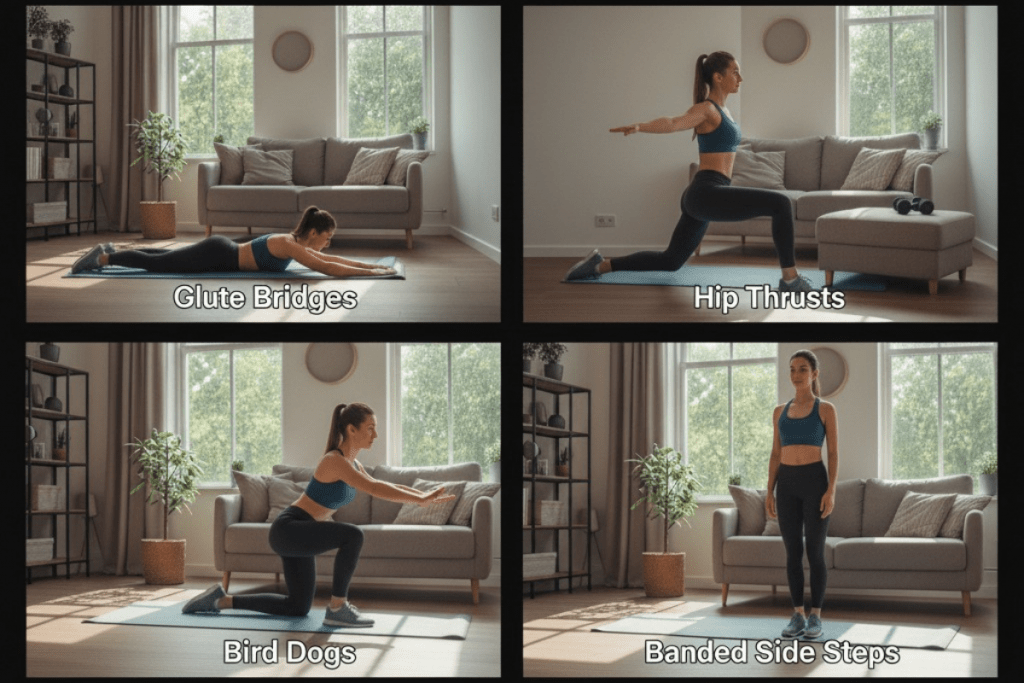
Glute bridges exercise and hip thrusts are the foundation of building strong, toned glutes. Lie on your back with your knees bent and feet flat on the floor. Push your hips up, squeeze your glutes at the top and lower slowly. Hip thrusts take this a step further, using a bench or elevated surface to increase the range of motion and intensity.
Donkey Kicks and Fire Hydrants
These bodyweight exercises work the glutes from different angles. For donkey kicks, start on all fours and lift one leg behind you while keeping your knee bent. Fire hydrants involve lifting your leg sideways while on all fours, which engages the outer glutes. Both exercises help shape strength and stability.
Glute-Focused Resistance Training
Adding resistance bands or light weights can make glute workouts more effective. Banded side steps, glute kickbacks, and weighted hip thrusts create consistent tension, which helps muscles grow and strengthen faster.
Extra Tips
- Focus on squeezing the glutes at the top of each movement to maximize engagement.
- Keep your core tight to protect your lower back.
- Perform slow, controlled repetitions instead of rushing through the exercises.
Sample Mini Glute Workout (10 Minutes)
- Glute Bridges – 3 sets of 15 reps
- Hip Thrusts – 3 sets of 12 reps
- Donkey Kicks – 2 sets of 12 reps per leg
- Fire Hydrants – 2 sets of 12 reps per leg
- Banded Side Steps – 2 sets of 15 steps per side
This routine strengthens and shapes your glutes while improving hip stability and overall lower body strength, all without needing a gym.
Ab Exercises at Home
A strong core is the foundation of balance, stability, and overall strength. The good news is you don’t need fancy machines to sculpt your abs — simple ab exercises at home can deliver powerful results.
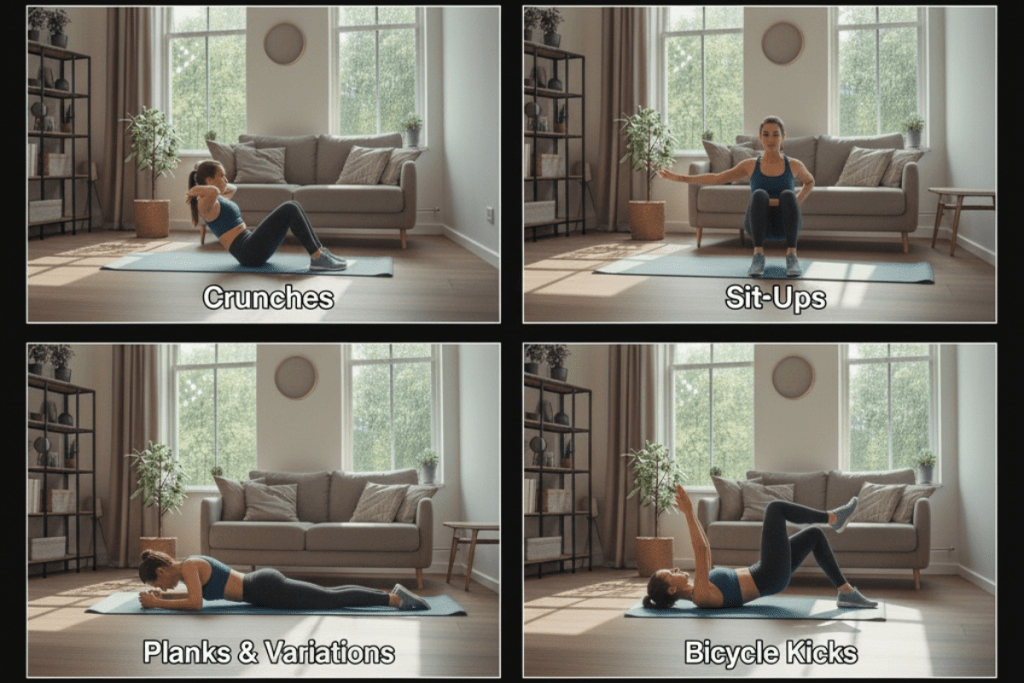
Crunches and Sit-Ups
Crunches and sit-ups are old school for the abs. Lie on your back with knees bent and feet flat on the floor. Lift your shoulders and upper back off the floor while engaging your core, then lower slowly. Controlled movements are more effective than fast reps.
Planks and Variations
Planks are great for core strength and stability. Hold a plank on your elbows or hands, keeping your body straight from head to heels. Side planks and plank shoulder taps add variety and challenge different parts of the abdominal wall.
Bicycle Kicks and Leg Raises
These exercises target the lower abs and obliques. For bicycle kicks, lie on your back and alternate bringing opposite knees and elbows together in a controlled motion. Leg raises involve lifting straight legs off the floor while keeping your lower back pressed down, which strengthens the lower abdominal muscles.
Ab-Focused Resistance Training
Using resistance bands or a light dumbbell can intensify your ab workouts. Band-resisted crunches, weighted sit-ups, or stability ball exercises add more tension, so your core muscles grow faster.
Extra Tips
- Engage your core throughout each exercise to protect your lower back.
- Focus on slow, controlled movements instead of counting reps fast.
- Mix exercises to target upper, lower, and side abdominal muscles for balanced development.
Sample Mini Ab Workout (10 Minutes)
- Crunches – 3 sets of 15 reps
- Plank – 3 sets of 30 seconds
- Bicycle Kicks – 2 sets of 12 reps per side
- Leg Raises – 2 sets of 12 reps
- Side Plank – 2 sets of 20 seconds per side
This will strengthen your core, improve your posture, and support overall body stability, all from home.
Combining Workouts for Full-Body Home Routines
Having a full-body routine at home helps you build strength and endurance and be consistent without a gym. The key is to balance exercises for chest, legs, back, glutes, and abs and give your body time to recover between muscle groups.
Weekly Workout Split
A simple way is to split your workouts across the week. For example:
- Day 1: Chest and Back
- Day 2: Legs and Glutes
- Day 3: Core and Abs* Day 4: Active Recovery (light stretching or walking)
- Repeat and adjust based on your energy and goals.
20-Minute Full-Body Routine
- Push-Ups – 2 sets of 12 reps
- Squats – 2 sets of 15 reps
- Resistance Band Rows – 2 sets of 12 reps
- Glute Bridges – 2 sets of 15 reps
- Plank – 2 sets of 30 seconds
This is a quick full-body routine for busy days.
Tips for Success
- Warm up before each session and stretch after to prevent injuries.
- Track your progress to stay motivated.
- Adjust reps, sets, or resistance as you get stronger to challenge your muscles.
Combining workouts into a balanced routine ensures every muscle group gets attention and your training is efficient, effective, and sustainable in the long term.
Nutrition and Recovery for Best Results
Nutrition and recovery are just as important as the exercises you do at home. Without fueling your body correctly and allowing it to rest, progress can be slow or even stalled.
Basic Diet Tips for Muscle Gain and Fat Loss
- Eat a balance of protein, healthy fats and complex carbohydrates.
- Protein sources like eggs, chicken, fish, or plant-based options help repair and build muscles.
- Complex carbs like oats, brown rice, and vegetables provide long-lasting energy for workouts.
- Healthy fats from nuts, seeds, and olive oil support hormone balance and overall health.
- Stay hydrated all day to boost performance and recovery.
Rest and Sleep in Home Fitness
- Aim for 7-8 hours of quality sleep each night to support muscle recovery and hormone balance.
- Take days off between hard sessions to avoid overtraining and fatigue.
- Do gentle stretching, yoga, or light walking on off days to improve circulation and recovery.
- Rest reduces injuries and makes your fitness routine sustainable.
Conclusion
Working out at home is a smart, flexible way to stay fit without the gym. With just a small space and minimal equipment, you can build strength, tone muscles, and improve flexibility. Home workouts let you train on your schedule, skip crowded gyms, and focus on routines that fit your lifestyle. From chest and legs to back, glutes, and abs, exercising at home makes fitness simple, effective, and sustainable for anyone.
FAQs
Can I build muscle at home without equipment?
Yes, bodyweight exercises like push-ups, squats, planks, and glute bridges are super effective for building strength and muscle. Adding resistance bands or light dumbbells can intensify and speed up results.
How long should a home workout be?
A typical session can be 20-45 minutes long, depending on your goals. Short, focused workouts with proper form can be just as effective as longer gym sessions.
How often should I train each muscle group at home?
Aim to train each major muscle group 2-3 times a week. Balance strength training with rest days to allow recovery and prevent overuse injuries.
Do I need special equipment for effective home workouts?
No, many exercises are bodyweight only. Simple tools like a yoga mat, resistance bands or dumbbells can enhance results but are not necessary.
How do I prevent injuries while exercising at home?
Warm up before each session, exercise with proper form and progress gradually. Listen to your body and take rest days when needed. Stretch before and after workouts to reduce stiffness and improve mobility.
Does home work help with weight loss?
Yes, strength and cardio at home with diet.
